Brett Tanner and Katelyn Mitchell use George Antone's book The Wealthy Code to sort money into three boxes: a job makes cash, the rich own assets and the wealthy own income. Brett runs the math on each one, from the 222 deals behind a $1 million net income goal to the 400 to 500 rentals it takes to clear $100,000 a month.
 Brett TannerHost, founder of Be Wealthy
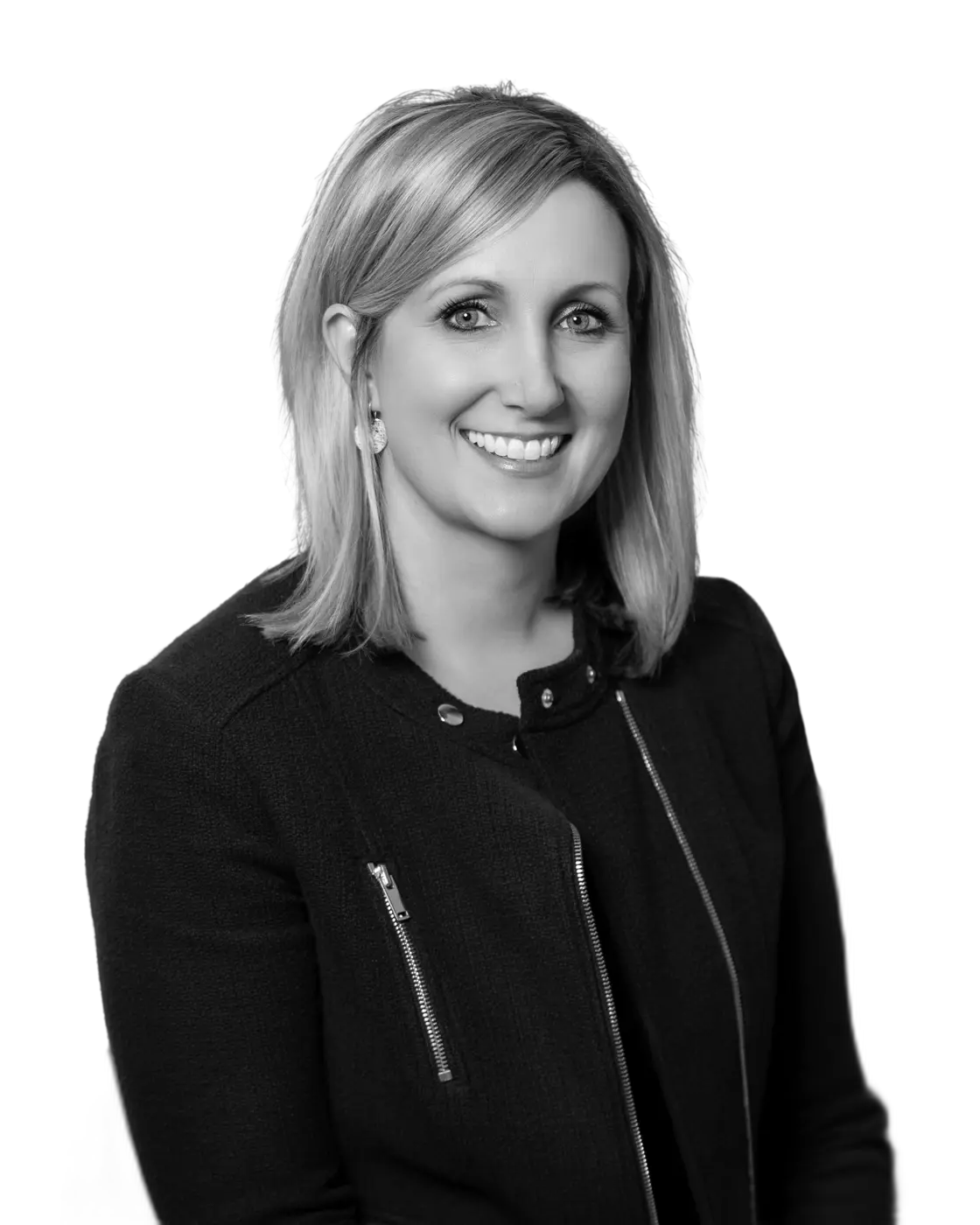 Katelyn MitchellCo-host, runs operations for Brett
In a real estate sales business, Brett wants 30 cents of net profit on every dollar of income, so $1 million in commissions should net $300,000. Pay yourself a salary equal to what you'd pay someone else to run the business, and book your own deals as if you paid an agent 40%. Hire at 40% on a 30% margin and the math goes negative.
Jump to 8:08To net $1 million with a $15,000 average commission, each deal nets $4,500 at a 30% margin. That's 222 deals. Brett's research on large teams found the average agent closes about 18 deals a year, so the goal takes about 12 agents.
Jump to 16:20Brett's example: put $50,000 down on a rental that nets $350 a month and let it cover a car payment. The rental pays for the car, and he still owns the asset after the payments end. Katelyn says the discipline to wait for the right asset is the hard part, because the wrong one sends you backward.
Jump to 21:25If money costs 7.5%, the rental has to earn 9.5% after real expenses. Brett now models a 45% expense ratio, up from the 35% his portfolio ran before COVID, because taxes, insurance and repairs jumped and his average turn costs about $4,500 to $5,000. He also puts at least 20% down.
Jump to 33:03To get $100,000 a month from rentals, Brett figures you need 400 houses, and closer to 500 once you pay managers to run them. He was on the road to 1,000 and stopped at 130. Every house is its own management unit, and soft costs like your time and attention grow with each one.
Jump to 43:12A house sells on comps, so running it 30% better than the house next door doesn't raise its price. A commercial building is valued at its net operating income divided by the cap rate, so every dollar of income you add comes back as a multiple in value. Brett's hypothetical for Roundhouse: $250,000 a year at an 8 cap would be worth about $3.1 million.
Jump to 1:17:18On passive triple net deals with tenants like Starbucks, Discount Tire and Circle K, Brett targets a 6% to 7% plus cap rate, and the tenant pays taxes, insurance and repairs. When Brett and Katelyn operate a real estate business, like their golf course, they aim for 15% to 20%. Working hard for 6% or 7% is the mistake Brett sees most.
Jump to 1:22:46Wealth is built on spreads. It just is. The gap between your cost of money and your return. That's how you make lots of money.Brett Tanner · at 54:35
The numbers Brett ran for each level of The Wealthy Code on the episode.
| Box | The goal or play | What the math says |
|---|---|---|
| Job: effort into cash | Net $1 million a year selling real estate | $4,500 net per deal (30% of a $15,000 commission) means 222 deals, or about 12 agents at 18 deals each |
| Rich: cash into assets | $100,000 a month from single-family rentals | 400 houses, closer to 500 once you add managers |
| Rich: the rental model | Buy only rentals that clear the bar | A 2% spread over your borrowing rate, at least 20% down and a 45% expense ratio |
| Wealthy, passive | Triple net leases with high-credit tenants | A 6% to 7% plus cap rate, with the tenant paying taxes, insurance and repairs |
| Wealthy, active | Real estate businesses like a golf course, storage or a mobile home park | 15% to 20% returns after 12 to 24 months of work improving it |
Tap any chapter and the video starts right there.
“The number one mistake of the investor is they make active investments and they receive passive returns.”
Brett Tanner at 1:23:26Plug in one of your rentals and see if it clears Brett's 45% expense ratio and 2% spread.
In George Antone's The Wealthy Code, which Brett teaches from, a job turns effort into cash, the rich turn cash into assets, and the wealthy own assets that produce income. Brett says the assets of the rich, like single-family rentals, build net worth on paper without much cash flow. When he analyzed his own rentals, over half of the return came from appreciation.
Brett's math says about 400 houses, and closer to 500 once you pay managers to run them. He got to 130 rentals and says nothing about it felt wealthy. He thinks rentals can work for a goal like $1,500 or $5,000 a month in passive income.
Brett won't buy a rental unless it earns at least 2% more than his borrowing rate after real expenses. If money costs 7.5%, the property needs to earn 9.5%. He models a 45% expense ratio and puts at least 20% down.
It means running the same dollars through deal after deal. Brett's version uses a line of credit: draw on it to buy an asset, then use the cash flow, say $5,000 a month, to pay it back to zero and use it again. He also calls out people keeping $300,000 in savings at 20 basis points when he just opened a money market account paying 3.25%.
Every deal has three seats: the equity owner, the lender and the operator. The lender earns a predictable return, holds the first claim on the asset and carries less risk. Brett says to see each deal from all three seats and think like the bank instead of the borrower.
0:00You've got a job which is effort. Convert that into being rich which is assets and then wealthy is where the income comes into play. Effort into assets, assets to income. A lot of the assets of the rich, they don't have cash flow associated with it. That's the problem. Wealth is not built on your rate of return, which which I think most people are like rate of returns everything. It wealth is built on spreads. So, it's that discipline to pull back and say the wrong asset, the wrong choice, the wrong math will actually send us backward.
I think money, the example I've used, it's a loaded gun. And I tell you, it's a loaded gun that you could fire it and hurt yourself or someone else with. Welcome back to the Be Wealthy Podcast. That was an incredible intro by Cole just doing
Will you do like a five, four,
five, four, three, two?
I am joined by the one and only Katelyn Mitchell for another episode of the Be Wealthy Podcast. We are not, to be clear, not remote. We're not. We're on location
1:03
at our our current office. I don't want to brag and throw it in everyone's face, but it's a it's a flex working space.
I don't want to.
We rented this conference room.
We Well, by renting mean this is one of the many amenities that we get for being here is access to the conference room. And so today, I know we've got great camera set up here. You can't see the full setup that if you saw the 7,000 cords and cables that are running in this room, Caleb, but I I don't like your workstation. Um, but before we started, Cole told me that I needed to get my workstation set up. And I did not know what that meant. And I'm going to tell you, I now do. and my workstation. I mean, what you're doing and what I'm doing looks similar, but this is a properly set up workstation.
I think your environment is everything.
Well,
and I'm I'm glad you feel confident in your environment such that you can move forward
with confidence.
And I'm excited for you to one day learn how I've set up my workstation. But we're not here to talk about workstations as bad as I want to. Uh we're here to talk about the wealthy code, Katelyn, and how people can think about the three areas of wealth in their life from a
2:07job.
Everybody's got to have a day job, everybody's got to create cash. The second thing is how do we become rich? There's there's some assets there and there's ways to think about that. And then ultimately, how do we become wealthy? And the book, the wealthy code by George Anton is one of the books that we talk about and it's actually homework we assign when we do our on-site event. We had one one one yesterday in this office and we had a group about 15 people. That's what it's designed to do. It's capped at 15 folks. They come out and spend a day with us and that's required reading. And every time we do it, I actually reread the book the week before. So I'm on my I don't know bajillionth read of the book. And it's funny when you people always ask me like, do you read the same book over and over and over again? And maybe it's because I'm not that smart. It could be part of why I do it. Um but I've got a list of about 10 books that I read every single year. And the thought process, right, is you would think I would read it and go, "H, I already knew all that. I would think that eventually I would get there. Ironically, I don't." And there'll be some section that I hear differently than I've heard before.
Interesting.
3:08
Every time. Like I've I could tell you I I read uh The Untethered Soul every year.
Michael Singer, an odd Brett recommendation, but uh an incredible book about just the human condition, right? And how to be untethered. I reread the one thing every year. And every year when I read it, I read a section completely differently than I did before.
And I think the reason for that, Kil, is we're if you're growing and you're making changes and you're trying to improve your life condition and live your best life possible, you're going to have times where you change in a good way. And so when you read the material, it's going to hit you differently because you're a different person reading it.
Well, and each of those books, it's kind of interesting you say that. I know compound effects another one that you really enjoy the all of those books and specifically the wealthy code are frameworks of the way to think through a concept that you it's a framework to think through the concept right you get a concept but then the way you're applying it by the different stage is always going to change and so if you're looking at like I think of the wealthy
4:09code as like an infrastructure a way to process the information where you currently are and And then obviously that's going to change year-over-year. So it makes a ton of sense.
Yeah. I think that um and for me as you know like I I'm a physical book reader. Uh I also doggeear. I highlight stuff.
I just want to say a physical book reader is the way that you have to identify yourself today.
Yeah. I'm a I don't like to because of all the other stuff that's out there and there'll be something new in the f. I'm like no I'm a physical book reader. I'm going to buy the real thing. Tactile. I'm gonna I'm gonna gra Isn't that called tactile?
Katelyn, is that the word? Is it?
I'm only laughing because literally last night at dinner we were talking about the Dewey decimal system.
Yes. Isn't the word?
That's how tactile you are.
That is I'm very tactile.
Tactile. You want to touch it, feel it. You're a tactile learner.
Yeah, I'm a tactile learner. And so before I just want to address the elephant in the room today. We were we're having a conversation because Katelyn, I'm going to be honest with you. I haven't had a haircut in a minute. Okay. And I've got these little wings right now. You can't really see them on on this camera because of my workstation setup, but boy, it's the wings are flying out. I
5:11said, I think it's like that Hermes god, the Greek god in the shoes. And Cole, correct me. I thought it was Hermes. And he's like, you really, we had a whole debate around the pronunciation before the show. And um I wanted to tell you guys that I'm wrong. I didn't know. But I didn't know the shoes were called like Taria. I believe that's how it's pronounced. So
that this G that this Greek god wears
that he wears. Yes. And that I have the same thing on the side of just my gray hair spinning out sideways. But I like to think it gives me the powers of a Greek god.
I have a s Where are you going with this? Is this like one of the Trumps where he goes way out way out left?
You got to get the weave.
You got to weave it back. Don't judge me for the chaos until we get to the weave. I got to hear what is the weave. How do we bring this back?
You get the weave. A lot of people a lot of people are talking about Hermes right now and I know some of the best a lot of people. Anyway, the weave is Katelyn, we're gonna put a pin in that. I'm gonna come back to it. I'm gonna come back to that. But the point I was trying to make is that Katelyn, most of our listeners are in the condition of a job. Okay? And
6:14they want to fly like the Greek god Hermes to be wealthy.
I got to tell you drop.
I thank you. I That's why the weave can go far, but it can come back. And so for for our listeners, viewers, and millions of people worldwide, George has been on the show. He's a good friend. And go watch the episode we film with George. He's absolutely incredible. But we're going to talk today a lot about job, rich, wealthy. What's the difference? And I think that when people think about it in this way,
I believe it'll unlock and change how people think about their money and their job and and how to get wealthy.
So, three categories.
There's a job.
That's right.
There's rich, how to get rich, and then there's how to maintain wealth.
That's exactly right. So, let's start with the first one. So, your job, Katelyn, is how you create cash. Everyone's got a day job, something they do that you you show up to work as an example. You get a paycheck, creates cash. You're own a roofing company. You own a cryotherapy franchise. Hypothetically, it doesn't matter. Whatever you do,
you could be an accountant.
You could be an accountant. You could be a dentist.
7:15
You get money fee for service in it's it's a job and basically it's effort you're putting in and you are at some level trading time for money.
Okay?
Even as a business owner, right? I own a business. I own multiple businesses, but I am active in the game, right? meaning I'm doing certain things as CEO to create an outcome. But so it's job is effort. Effort to create cash.
You know, for a lot of it's retail sales, it's flipping homes, wholesaling, uh running a real estate team, running a mortgage division. Any of that, all that's cash, okay? Everyone's got one. You're always going to have one when you're in the game. But cash is the raw material. It's the raw material that can make you wealthy. It's what you do with it that would make you wealthy. But it's really hard to decide. So when you make cash, there's some different choices, right? I could torch it. I could invest it. I could donate it. I could save it. So there's not infinite options. But so we've got to figure out our job. And so when we think about it from a business concept, having our job is actually really, really simple. And I drew this yesterday and it's where I always start when I talk about money uh in terms of your job is there's a right ratio as a business owner that you should make. That's called your net margin. In other words, Katelyn, I shove a dollar into my
8:17business. I hope to get that dollar back with some return on it. I'll speak about the real estate sales business. So I put a dollar in there. I want my net profit margin. If I earn a dollar in income, I want to make 30%. 30 cents.
Okay?
So, if I do a million dollar in commission income, my target is I want to make $300,000 out of that. And when you break it down, like, and it's every business is going to operate off a net margin. Okay? And so, if you're listening to this and you're not looking at your P&L every month and running these three numbers, which is what is your net margin? That's net income divided by total income. Mhm.
You're going to run your expense ratio, which is your total expenses divided by net income. And you're going to run your costs of goods sold, your COGS, which sounds like something really crazy cool and complicated. It's not. It's all of the money that comes out before you could start paying your bills.
Got it?
So, in a residential real estate business, right, I've got to pay my brokerage, right? I I'm going to hang my license somewhere unless I own the brokerage. If I don't I own the brokerage and I don't have to pay that. I'd have to pay my people, right? I've
9:18got to pay a salesperson that did a deal. And so in the real estate sales business, if we brought in a million dollars in gross income, we would want and we did no deals ourselves and even if we were doing the deals, we should treat ourselves like an agent because it's it would tell us the economics that if we ever hired someone, right, that we would know that our business still works. It's the biggest mistake I see people make. This is the number one thing I see every time someone comes into your world and wants to start in training and education with you. This is the first place you start.
Which is why that family office starts with business management, right? Unless your business is making the right margins. Nothing else really matters because it's going to slow us down. It's going to drag us out. So, this is the first place you start. And you always start with the pizza, right?
We we do a lot of pizza. And the reason why this is so important, Katelyn, is because they'll never be able to scale their business if it's built on the wrong economics,
right?
And you've got so many people that work 80 hours a week, 60 hours a week, 50 hours a week in their business and they work for free as a business owner,
10:20right? I put no salary in there for the things I'm doing and then I'm selling the bulk of all of, you know, the sales that we have and I'm working for free. So now when I hire someone and I'm going to pay them 40% commission and I was only making 20% before because I was overspending and whatever it doesn't even if I was making the right 30% margin but I'm not paying myself. Well the problem is when I hire the new person and pay him 40. Well if you take a 30% margin Katelyn you subtract 40 from it. I'm not very good at this but that's a negative number. And so when you run very long in the negative numbers you just kind of pack it up and that's a wrap and you're out of the business. And so everyone needs to understand those numbers.
Well, and I think everyone I just I want to break it down because not all of us move as as fast as how you just described it.
Well, and the reason why they don't move that fast now the wings. I mean, you know what I mean?
Yeah. We're going to have multiple w multiple weaves of the wings.
It started as a bit and then right now we've already had two times.
I know. And now I'm guessing you're going to get seven.
You know, and I will tell I'm a little disappointed in my Trump impersonation I
11:21did there. Uh I need to work on I It's a little more gravel. You need a little more gravel when you do it. But enough about the wings. Go Katelyn.
All right. So, I let's say hypothetically I'm listening to this and I have a small real estate team. I'm currently doing all of the listings on the team and I've got a buyer two buyers agents that are working with me.
Okay.
And I'm doing a million dollars in GCI. Our team is doing a million dollars in GCI.
Gross commission income. Gross income.
Gross income. and I'm taking, you know, it's an escorp and, you know, I'm paying myself a small salary. I'm taking 60,000 in a salary.
Okay.
How should I restructure? How should I be looking at? What do I need to tell my bookkeeper, I guess, would be the better question in order to get my business financials set up in such a way that I can really look at these numbers. I see a lot of people when I get on an initial call with them and we're looking at these going over their P&Ls, they have trouble grasping the concept of how do I actually see it on my financials. So,
12:26I'm taking a small salary, right? That's coming out as a W2, but I don't really know how to do the rest to structure it in such a way that I could see am I profitable or not? Am I cutting myself a commission check? Am I not? What does it look like? How do I how do I structure that so I can really see that my business is making the right amount of money?
So So the first thing you should do is start with a salary, right? Most people will be a subscorporation because they want to avoid the self-employment tax, right? That's the reason for that.
That salary should be the amount that you would pay to hire someone else to do the work you're doing, not the sales work, but the work you're doing in the business. So if you're running a small real estate team, I think that $50 to $60,000 salary around a million, it makes sense to me, right? that's a right number that if you were to hire someone else to come in and do that job, right, that's what it would cost. So, what we're trying to do is find out does the business work without you doing all the work for free inside of it.
Because sometimes when we look at it, we end up looking and we see, you know, the business made x amount of dollars. Let's
13:28say it made
it might make great money,
but we never paid what would be a normal commission to someone else if we ever replaced ourselves.
Well, so we start with the salary. The second part, we need to take the commission. So, we take all the deals that we did, whatever that is, and you go to your accountant and you say, "Hey, I just want to allocate." Again, we're not changing the numbers here. The number the net number is the same. I want to see now in terms of a margin is going to change, right? We just move the money around. But they could do an allocation and show, hey, Katelyn, you did those deals and I pay my listing agents as an example, we pay 40% if someone did this and I did all those. So, if I paid 40% to an agent,
sure,
what's my net? And if that number is not 30%, it just means as you go to scale your business, it might make your your net margin 3%. Well, that just means when you hire someone in your business, Katelyn, it's going to suck. It's going to suck because you're not going to make any money and you're going to go, "Oh my god, I hired all these people." And this is what people do. So, they go hire them and they field of dreams it, right? They try to be Kevin Coer and they think if I build it.
By the way, we're huge Kevin Cosner fans.
I couldn't be bigger fan of Kevin
14:29Cosner.
I always like to mention love Field of Dreams, the movie. I have the same birthday as him. It's kind of a big deal.
Is he a millennial?
And so, but so I if they don't do it right and they keep growing and they hire these people and then what they find out, and I see this time and time again, it's the number one mistake in the real estate industry, then they build this huge business now doing three million in GCI and they're making less money than they were doing a million. Then they can't figure out why. And it's all because they started with bad math. And so, if you're listening this right now and say, "I don't understand my net margin. I don't know what it should be for my industry. I don't know how to calculate it. I don't know what my expense ratio my costs of good sold are. If these are words you've never heard of and it's like a stranger looking at you in a parking lot. Okay. You need to become friends with your P&L.
Yeah.
First thing to if you're not SP if you do not understand those three basic and by the way it's as complicated it gets. It's all you need to know. How did I compare to last month? A year-to- date average in a in last year, the same month in terms of a net margin percentage. You just want to maintain your mar. It tells you if you're making money, the right amount of money. And it's so critical. And people just don't
15:31do it. And this was my journey, right? When I first started, I all I understood if there was more money in my bank account at the end of the month than the first, we're winning. And if there's less, we're bad. But that that has nothing to do with how the business is performing, right? Because it could be totally misleading. And I just think people have got to take a step back on their job and figure out, right? How does this actually work? So, let's do some math.
Okay,
let's say Katelyn, someone on here is wants to really grow a massive world and their income goal is they want to net a million dollars, not gross a million, which
I want to net a million. I want a million dollars in my pocket.
And let's assume that the average commission's $15,000.
Okay? And 30% of $15,000 is $4,500. So, every deal we do, we're trying to net $4,500 as a real estate agent. Okay? And this wouldn't matter if it's a roofing business, every roof job, we're trying to get it to net this amount, right? Sure. Every business has a profit per deal, a profit per transaction,
and we should look at, you might have multiple product lines, and you're going to want to look at the profit per
16:33product line. But so, in this case, we got 4,500 bucks. So, if we take a million dollars and we divide that by the 4,500 in profit, the question we're solving for is, how many deals do I got to go do? Well, that answer, Katelyn, is 222 deals. Cool. Well, as an individual, it's going to be very hard to do 222 deals, right? That's highly unlikely slashimpossible. So, now we go, well, how many agents do I need to do that?
And I've done a lot of data uh throughout the years, as you know, you were a big part of our our research project, and it was probably like seven or eight years ago. We ran all the agents in the country. They're running large teams. And we ran the data at how many deals did they do and how many agents they have. And what we found is the average real estate team. It's about a deal and a half per month per agent or 18 deals per year.
So if each while people say, "Oh, I've got agents on my team. I've got Tom. You don't understand. He's just a, you know, sales wizard. He's doing 36." And I'm like, "Yeah, and Jason started yesterday and he's doing zero." If you take Tom's 36 deals and Jason's zero, you're going to average 18.
Sure.
You can't pick just the people that you want. They're like, "Oh, look at these
17:35three people are doing 36. I got it. But you have eight people. There's an average and everything. And so I I found this to be true in my own business. About 18 deals per year or 18 to 20 is what you're going to get. Which means, Katelyn, we're going to need 12 agents on the team. So it's it's just math, right? The language of business is math. And most people have no idea the math around their goals. So when you think about your job, right, we got to understand the math because the ability for us to go faster and grow our net worth, yes, we could use other people's money. Yes, we could do all these other things. The fastest and best way you can do it and the way I've done it in my life was to grow my income. And I was self-funding my entire life through my income, taking my cash, investing in the assets of the rich to become wealthy. And so that's what I'm going to get is do we know the math per widget to hit our income goal?
The unit economics. It
it's simple unit economics. It's simple unit economics. And maybe Cole in the background you could research this. I think the book that teaches unit econom I think it's called like the lemonade stand.
18:36
I think that's exactly what it's called
and it might be something more
and it's a cute little book.
It is but it it is the cutest book and it teaches one of the greatest concepts in business which is unit economics. Incredible book and we'll put that in the show notes. I believe it's lemonade stand and so everyone needs to do it. If you cannot state your math per widget you're not in the game. to stop this podcast, put the squat rack down, make a note to yourself, and say, "All right, I'm going to go figure out my unit economics." You need to understand that. And it's not that complicated. So, all right, we want to do that. There are only, Katelyn, we think about it, to make more money in our day job, there's only three ways to make money in business, to make more money. There's only three. I know people think there's thousands of ways, right? you go on if you definitely go on on Tik Tok Cole or somewhere really cool today and you look around you would act like there's thousands of ways you could do it and Katelyn that's not true. So the first way you can make more money is you could sell more widgets.
Okay.
Okay. So I'm a real estate agent. I can sell more homes. I'm a roofer. I could sell more roofs. I just more customers, right? And that's going to be done once I understand the unit economics. It determines how much I could spend to
19:39acquire the customer. So if I know that I can scale it. But by the way, if it costs me too much to acquire the customer, right, my unit economics will suck.
So, first figure out the unit economics, then back into how much are we trying to make in the business? And then multiply that or divide that to find out how many more widgets do we need to sell. Right?
Well, you're going to pick one of these three things. I could choose to sell more widgets.
Okay.
Second thing, I could choose to sell more expensive widgets.
Oo.
Yeah. So, I could say in real estate, I'm going to sell luxury houses or more expensive homes. Okay.
As opposed to less expensive homes, I'm going to choose to do larger roof projects, right? I'm going to choose to do in every industry, right? There's a good, better, best, and everything. Sure.
So, I'm going to choose to do the higherend, right? More expensive. I'm going to get more dollars per customer.
Okay.
Third way to do it is we take our customers and we sell them more products or we sell them more times.
Okay?
Right? That doesn't work in every business, but in some it does, right? So, they're going to have you're going to get more they call that lifetime value of a customer. We're going to sell more products to customer, but that's
20:41it. Sell more, sell more expensive things, sell more things to the same person. Okay, that's it. That's the only three ways to make more money in business that I'm aware of. Okay, so when we look at our business, we got to figure out what are we optimizing for. And typically, you're not going to optimize for all three in and there might be a business where that's the case. Like I I would tell you in residential real estate, I chose not to become a luxury agent. I chose to sell more widgets, right? Because as my marketing got more broad, right, and we were, you know, when we were number nine in the country, number three at KW, the more marketing I did, the more I was going to pull to the average.
Sure.
Right. I wasn't targeting like now if your marketing is like a farm and I'm working this luxury area. That makes sense. But I was on billboards and the internet and so like I'm going to get an average. Well, that average I'm going to hug the average of my market.
Your geo target
like I mean like the Maricopa County, whatever the average was, the average sales price, that was my average sales price. But understanding this before you start is important. Right? Like you've got to understand where you're going. So your only job here, create cash and now we're buying assets. As long as your
21:45business makes the right money, you now understand how to scale it. We're taking our effort and now we're turning time, which is effort, into assets, right? That's it. That's your job. Now, if you turn your time and effort into cash, and you buy a car, you buy a vacation, you buy a thing, all those things are great. I would prefer you bought the assets and then let the assets buy the things.
Okay?
And that's a huge paradigm shift like and it's that's the point of Rich Dad Poor Dad. If everyone got like the one point of Rich Dad Poor Dad
was to have your assets buy the things you want in your life. Like that that would be the greatest lesson they could learn from. So rather than making an extra, call it $50,000 this year and going and buying the new car, you're saying absolutely, let's get your income from your job as high as possible. Take the extra income from that and rather than you use this phrase all the time, lighting it on fire, right? by buying assets that don't or buying things that don't produce cash flow. You're saying
22:50take that 50,000, buy something that produces cash flow, and then use that cash flow to buy the car.
In a in a just a super simplistic example, I would say take my 50,000, I'm going to put it down on a piece of real estate,
some investment,
a leveraged piece of real estate,
a leveraged piece of real estate, and hopefully that deal nets me $350 a month as an example. And so that $350, the dream would be that would be my car payment.
So in that context, if I did that, Katelyn, number one, I got an asset that's going to last for it could last for forever. And yet the car payment is not going to last forever. So I still got my 50. The car is free. It's paid for by someone else, right? Your your tenant pays the rent, which pays the mortgage, which pays the expenses, and then pays your car.
As you know, I am very obsessed with other people paying for the things that I have in my life. I'm obsessive. I do know that.
And when I set a goal in the business, I'm like, "Hey, I got to go build the business to here cuz I need someone else to pay for that so I don't have to pay for it." If I want to buy anything in my personal life is all paid for by cash flowing real estate or investments.
23:53
Um because the first place I think and that's the difference between people that are ridiculously wealthy and the people that just get to rich is that they figure out a way to have everything paid for by assets. And it's what sets you free. But that discipline, Brett, that discipline is what can mess it all up. I literally was talking to a client of mine last week and he was he's really working on helping his ops gal go from the job to like I can actually change her life and I want to help her to see how to go ahead and build wealth like mine, but she's not entrepreneurial like me. And so we were trying to think of the framework of the best way to describe it to her. This was the the bridge that he was worried about. You know, the more she makes in a bonus, the more she makes in all of these ways. His concern was that she would have what you and I call lifestyle creep. And he's not trying to control her by any means, but he's like, literally, I can change her whole life if she'll just listen to me for seven years. I can change her whole life. And so, you know, he he has colorful language. And he called it the not
24:57effing up program. And he said that's all she has to do. She has to take the money from her job, from that increase, and she just needs to take it to buy assets that will produce cash flow and then use that to buy all of the things that she wants. And he's like, if we can just help her with that bridge. So that's what we literally spent our whole call on last week was how do we provide the framework to her by using our be wealthy calculator by using all these things to show her that with the simple discipline of waiting for the shiny object for tomorrow not today and use it to buy the right assets. It's wealth is really simple to get to which is what you're about to show us. But this is the one place. There's going to be two places in the episode today, but this is place one where people consistently mess it up and don't have the option to move to the next phase, which is what you're about to go over, which is the asset phase.
Well, and if you get your personal expenses, what what the challenge is when you later, you're going to have to go backwards, which is it's really hard to go backwards financially. And so what people do is they they build this world.
26:00it. I will tell you it's very hard it to if you've experienced something luxury once tried becomes necessity. Right?
That's one of my favorite quotes.
I will tell you it you try a luxury and then you go back the other way, right? Go fly first class everywhere you go and then go sit in the back and it by the way before you flew first class every time. The back was fine.
You you know you helped me with this. you go back there and you're like, "Oh, the only way when I
You said Katelyn, they're paying you to be back there."
When I I listen, I still I fly first class a lot, but there are times where cuz I'm a math guy, right? And I just look what I do is I Let's just say a first class ticket is $1,200. Yep.
And let's say an economy ticket is $300.
So, the Delta is $900 bucks.
And if it's a two-hour flight, I go, "Dude, they're going to give me $900. They're going
$450 an hour.
They're going to give me $450 an hour to sit in the back and drink
these buns and to drink a Diet Coke. Well, you might get me to do it. I'm in." And that's why I joke. They're paying me to be here. This is crazy.
And they're giving me a little soda along and some pretzels.
If you need help in your business right now, you've got a challenge or an opportunity that you really want to hone in and capitalize on it and make a
27:04gamechanging breakthrough in your business. Come out to our one-day workshop. This is something we've never done before. We're now doing them at the resorts we've bought. So, they could be at Apple Mountain, Georgia. They could be in Northern Arizona. Um, they might even be in Bise in the future. But you get to come to a one day where there I'm not going to present slides. It's literally you and your business and you're going to leave with an action plan you can implement in your business. Go to bewealthypodcast.com and you can click on our upcoming events and see where we'll be and book to come. We have the room is limited. We have no more than 15 people in the room. Go to bewealthypodcast.com and you can book our one-day workshop coming up. So this this I want to I I did see this post and it's a little bit of a segue but I want to read this post. Okay.
And it describes a little bit of the lifestyle group, but it's a different problem we have in our businesses. But I want it's from my buddy Dustin Ren. You know, Dustin, and I love the message he's sharing on the social medias these days because we need more truth tellers in the fake world we live in, right? I pride myself on being a truth teller in a fake world. And so, he's got I'm going
28:06to read it verbatim and it's so good. He says, 'I was in a meeting today with an incred an an incredibly successful man from my hometown and he shared a story with me that I thought was interesting and I want to share with you. Here it is. A very successful businessman goes back to his high school reunion. He runs into an old classmate who had the same trajectory. The guy's bounced around and struggled financially and it feels feels like life simply never gave him the opportunities other people got.
The successful man tells him, "Come to work for me. I have the easiest job in the world. He takes him to his business and shows him a machine with a button. His only responsibility is to show up on time every day and push the button. When he pushes it, two bags of money come out. The instructions are simple. One bag belongs to the company and one bag belongs to him. So, the guy starts working every day on time. Pushes the button. Two bags come out. One for the company, one for him. great job.
For the first time in his life, he's
29:09making great money. His lifestyle improves. He gets a nicer house, a nicer car, starts living a lot better. But eventually, something changes. He quit looking at only the first bag and starts looking at the second bag. And he begins thinking, "I'm the one pushing the button. Why does the other guy deserve the other bag? He's already got plenty of money. Without me standing here pushing this button, he wouldn't get anything. Eventually, resentment replaces gratitude. And one day, he pushes the button and takes both bags. When the successful businessman discover what happens, he fires him. The struggling man walks away convinced that the successful businessman screwed him over and completely forgetting that before the businessman gave him the opportunity, he didn't have either bag. The story is really about entitlement, gratitude, resentment, and perspective. Someone gives you an opportunity that draically dramatically improves your life. At first, you're grateful for what you're receiving. Eventually, you become
30:11accustomed to it. Then you start comparing what you're getting to what they're getting. Gratitude turns to expectation.
Expectation turns to entitlement. And entitlement eventually convinces you that the person who helped you is somehow taking something from you. You stop remembering who gave you access to the button in the first place. People rarely resent you while they're grateful for the opportunity. They begin resenting you when they start believing their contribution to their success belongs to them.
And then he goes on, he says, he's grateful for his partner and he'll keep pressing the button till he's dead. But the point of that story, K, I think it's really important to realize and I think that happens in the employee, but it happens to us as the individual.
We first get this role and we're achieving and so what are we going to do? we're going to buy the car, right? And we love the car, but then qu, you know, it's not enough. As opposed to if we took a different view, I think, with our money and our opportunities and always remain in gratitude, but like start and we just flipped it over. Like if that person used the money of the bag
and they used it to grow their world and
31:14their passive income, I think they would feel differently about it
a thousand%. Because if you live in the consumer world and it's all about consumption, it'll never be enough because there's Katelyn the marketers out there. There's infinite things to spend money on, right? You just open any social media app, scroll, it's all ads. It's all marketing on how you are going K. You get this new hair product. Oh my gosh, look at them jumping off the waterfalls and M you're like what in the
what does the hair product have to do with the waterfalls?
Nothing. The point is though, we've got to start by thinking differently and focusing on how do we win the game? thousand%.
And you know, in our our event that we had yesterday, you know, I start with people say, "Well, should I buy this asset or that one?" I go, "I have no idea. What do you want out of your life? It depends on the sides of life that you want." And so, where most people are going to start turning their their effort into assets, the place they're going to start, they're going to buy something that we're used to. Okay? We're used to home ownership. So, a single family rental, a duplex, if you want to house hack or multifamily. And I did do you air quotes for the listeners is when you say house hack, but that's where most people should start. It's a
32:18great place to start. Now, the reason we call this the assets of the rich, Katelyn, is because it's really hard to get wealthy owning single family rentals. I'm not saying it's impossible, and one of our listeners and viewers might be the person that goes and does it. I think it's really, really challenging because the amount that you need, which we'll walk through in a minute. The beauty of these, right, is in baseball they're singles, right? Rarely are you going to hit a grand slam in a single family rental, right? You own it, you know, it's making $350 a year. Over time, hopefully that grows. You're paying down debt. But in large part, it's an appreciation play. Okay. So, how should we think about it? How should we think about this model of the rich as we're moving to wealthy? So, the goal, the goal would be we figure out what that single family rental is actually going to net. And once we figure that out, ideally in the book, the wealthy code teaches us this concept. It's a spread. And people get wealthy based on spreads. It's how banks work, right? They're paying you 1% on your savings. They're lending it out to 7% for someone for a car. The delta between the one and the seven is 6%. You
33:22make a lot of money doing that.
Often called arbitrage.
Often called arbitrage. In the book, he he calls it a spread. So in rentals, what does that mean? If we could get a 2% spread between the debt rate, meaning if we could borrow money at 6 and a half today is probably about the investment rate, might be a little higher today as we're filming this. Maybe it's 7 and a2. Um, we would need to get a 2% spread. We need to get a rental that's performing at 9 and a half. Very hard to do today. You're going to have to look at a lot of deals to do that. The
at 9 and a half with the right assumed expenses, right? We've got to have property management built in. We've got to have assumptions on vacancy. We have to have assumptions on repairs and maintenance. And so it's performing not if it was 100% perfect all the time. No repairs, no vacancies, no property management. Real numbers. Real numbers. We have to have a 2% spread in this model. Correct.
And an correct an easy way to think about your expenses, we'll just do it for the for them here. It used to be the age-old we could operate at a 35% expense load in single family rentals. And in my portfolio that was possible on
34:26average across all of it up until co.
Okay.
Postcoid is no longer possible
because of why? What what changed?
Taxes, insurance, repair costs have all gone up dramatically.
Repair costs being labor and materials went up
and your your turns, right? So, it used to be, right, if you had a $2,000 security deposit and they moved out, the $2,000 security deposit would cover a lot of the damage.
Sure. Today the average turn in my portfolio is running about $4,500 five grand. And that's not the worst one. That's an average. So like you get the one that's 12 grand. They move out and you're like, "Oh, it's destroyed." Right? So I I think you're more like 45% expense ratio.
Okay.
Today. So if I'm bringing in $10,000 a year in rents, my expenses are going to be 40. Now, this is before debt, the part that people miss, right? This is net operating income, which comes before debt. And so we'd want a 2% spread. The reason for that is it protects the investment. And it allows us to make a great return and give us cushion
to maximize the opportunity. Now, most folks, Katelyn, we know they're just deal junkies. And I'm not talking like
35:29the the negative in in the in the the negative world there. I'm just saying they're deal like I just got to do a deal. And you don't understand. It's it's a great rental. I hear this on a call. My clients will come on, Brad, I got a great rental I'm going to buy. It's just a great rental. I just got to do it because it's a deal and it's a great rental. I'm like,
well, it's because it's because we want to move fast. We want to get it done. We are achievers. We're high drivers. We have a goal. We want to get it off our plate and we want to get moving and I think we see how easy it looks on HGTV or or whatever it is and we just we want to go right. It's not it's malent. It's that we want to achve invest in when all you want to do is move forward faster. Like that's why we're all here, right? And so it's that discipline to pull back and say the wrong asset, the wrong choice, the wrong math will actually send us backwards and we just worked our asses off at the job, right, to get the income for it. The whole thing is it's the not mess up program. We have to make sure we're
36:30getting the right asset and not just getting so excited to get another one on the books that we make the wrong choice. That discipline is hard, Brett. Well, we've uh I'm going to tell you this is it relates to your money. If you can't use a calculator, you're not going to have much of it, right? And and it's sad, but like it none of this is complicated. I could teach I could teach any second grader how to do the math we're talking about here. They would crush it, right? You take the total times 045. And and does this make sense? Is there a 2% spread between what you're It's not complicated.
It's just red light, green light. But why can't we do it? Why do we mess it up? Why do we get emotionally involved?
The reason is we don't build models and we buy enthusiasm and hope rather than math.
What is the phrase you say? If the dreams are big enough, the facts don't matter.
It was the old Amway slogan. It's it's my best ever. And so when someone says something like, I'm just going to buy this and I'll buy it anyway and it's going to be amazing. Oh, cool. If the dreams are big enough, facts don't matter. Go get them. Right? That's a very nice way of telling someone they're a complete
37:32
It's like in the South when it's like bless your heart.
It's a
bless your heart. Someone tells you something insane and you know I I I have got to a point in my life Katelyn where I quit arguing with people. I literally quit arguing. Someone tells I walk out sky outside right now and they say the sky is red. I go cool. I have no desire to correct the general public. Like if like if you're in our end you're in our world of course I'm going to like educate you as a member of our thing. But I don't argue with the general public anymore about their views. I'm like whatever you whatever you think it should be it should be. It's my universal answer. But so everyone here
but not when it comes to the math on your rentals. If you don't care where you're going, then every road every road works.
Maisy's shoes or whatever that was.
You've got to So, the model for your rental, I need a 2% spread.
Okay.
I'm going to put at least 20% down. That's a breath thing.
At least 20% down. I'm going to model an expense ratio of 45%. Okay? And I'm going to run it like a business.
I love it.
Cool. So, if you do that right, you need a model. And so, that's a basic model, Katelyn. And the key is everyone should build models for every part of their
38:34life. So we use rentals as one, right? But you should have a model for your health. You know, I'm running in models right now on every aspect of my health to just to check everything out. But I've got a model for my marriage.
I've got a model for the relationship of my kids. I've got a model for my investments. And here we're here to talk about money. The reason why you build models is what you alluded to a second ago, which is it takes us out of being an entrepreneur or takes us out of just running and gunning and puts us into being something highly purposeful where we're making intentional decisions as opposed to emotional decisions. And models do that for you. Now, you could build you could break your own model, right? You could violate it, but at least if you're looking at and making that decision. And I the a lot of the models that you know first of all Gary just Gary Keller my mentor and coach you know just beat that into my head that you need a model for everything in your life and you should be reading and bringing in new information to challenge the model.
Now based on a lot of research and information you may choose to adjust the model and that's okay but you at least have something that's guiding your decisions. And the book on this, it's a heavier book, uh, Ray Dalio's book,
39:37Principles, and it's all about, he used the word principles, we use the word model, but it's all just like having things automated in your internal decision-m that just help you make the better decision.
I the the funny thing is money specifically is the one of the most, if not the most, emotional topic in the world. The way people react to money and conversations around money and the way they make decisions in money is full of emotion. It's almost always emotionbased. And so I love Gary's concept that you know he's shared with you and you have beat into my head which is you have to have a model such that you won't make the emotional decision. You started at the beginning by sharing with everyone and sharing with me that if there's something you want to buy for your personal life that is kind of an emotional choice, right? Like let's say hypothetically you want to buy a brand new Bronco when they first came out, right?
Yes. Very familiar.
A hypothetical example, you came to me
40:39and said, "We've got to find a way for me to get some assets and move forward in some ways so that I will have the cash flow to go buy that." and you said, "Hey, it's an emotional choice that I want to buy this Bronco. It doesn't make any sense, Katelyn. I do not need another vehicle, but I gotta tell you, I want it. My family wants it. We got to go figure out how to get it." But because you had the model, you very easily could have wired in the money. You very easily could have, you know, financed it at any point. You could have done, you could have put on a credit card and got points and gone to Cincinnati for free, right? You could have done any of those things. But because you had overlaid a model that came to how you handle your money, you made the right decision for it. So here the big thing is making as you're going and investing in those assets, putting the right model in place to make sure that you're getting the right asset that's going to get you where you want to go will be that safeguard. By the way, side note, the delta of the difference from the two book recommendations you've made so far, you
41:41win on one side a lemonade stand, which is about 48 pages and written for a third grader and said the absolute best unit economics example of all time. And then on the other side, you have Ray Dio's principles, which is one of the hardest books to read. It is so heavy and so down.
650 pages and it's it's a lot.
It's exhausting. It's incredibly powerful, but for the sake of the audience,
Yeah. Don't ever judge where the lessons will come from because the delta is wide. See your Dewey decimal system for more information.
Well, first of all, a great comment though. Guess what? There's a children's book written on Radal on Principles. Totally.
That I read in my kit and I'm like I actually like it better because it's more written for me. But the children the children's book version of Principles is a lot like the lemonade stand. So if you if Principles too heavy,
go get the Principles for Kids, pop on down. I like that one too, you know. So it's perfect. I love it.
So, most of us make massive investments in our business and some of those investments don't pay off. So, you can come spend a day with me for $997. You come out to one of our resorts. You're going to spend a day, bring your
42:42challenge, bring your opportunities, and let's work through it in a one-on-one coaching session. You're going to be in a room of your peers. No more than 15 people are going to be there, and I'm going to coach you personally to tackle your challenge and your opportunity. Go to bewealthypodcast.com to see the next dates for our event. Okay. Let me cover level one, which is build your model.
Okay.
Okay. Level two. Rich is owning appreciating assets. So, as we go through this section, realize the way you get rich, and this is the first step, and everyone should go through this. They should not try to jump
to the wealthy, which we're going to have a way to to do both, but for the sake of this, we're going job rich wealthy. So, you're going to own appreciating assets. So, we got a model. We bought a single family house. Value goes up, right? We get that feeling. Rent comes in, we own it. It kind of is like winning. But here's the challenge, right? If we want to have $100,000 a month in passive income, which is a huge world, right?
Enormous number.
Like that's a massive number, but like it it helps to do the math. I can kind of do in my head. So if I want to do $100,000 a month in passive income,
43:44Katelyn, and the average rental pays me 250 bucks
a month.
I need to own 400 houses. And
400 houses.
400 houses. And so that's
two and a half toilets per house.
It's a lot of toilets. as my dad was in real estate something but toilets tenants to trash as my as my dad would say you're 400 houses and so you're like
okay that was the journey I was on I was on the road to a thousand right got to 130 and realized you know I was climbing the wrong mountain and we filmed a whole episode we'll link that in the show notes so we won't go that here but the reality is it's not even 400 Ken because as we get to 400 we're going to need we're have all the managers then we're going to have people on the staff that are managing the managers and so we really need like 500 and so you're like okay I have 500 houses to get to this. It's just hard, right? And it doesn't really scale. And I'm going to tell you, it's not going to feel wealthy. I'm going to promise you that cuz and again, I did I I didn't know I didn't get to 400. I got to 130. I'm going to tell you there was nothing about it that felt
44:45wealthy.
It felt like an enormous pain in my ass. But the point was right it the appreciation there of this middle ground is critical for people. So you didn't torch it. You put it into something. It was paying for your personal life and it's growing over time, right? And it is naturally going to rise over a long period of time due to inflation.
People are going to say, Brett, this is a little bit whiplashy because we did spend the last few episodes talking about and and you have not been shy about investing in single family residential may not be the right move today for everyone and those rates of return may not make sense without the right model applied to them. you you are going to have to dig today, right? So, I currently in the last year I've bought one or two single family rentals. So, it's not I'm saying they're all bad. I'm not going to hold them forever, though.
Okay.
It is a holding container that I am letting it do its thing until I get enough of them to move them all up into the wealthy assets.
45:48
This is the missed piece. I can't tell you how many calls I've had about that. This is the piece. If you think of your your appreciating assets, the assets of the rich, single family, duplex, they're they're great places to park money in a midterm, as we teach in our world, a midterm investment.
Okay.
The assets of the wealthy are forever. They're things that you are generational in my opinion, right? The way you want to do it.
Okay. So, we're still if if the model makes sense, like you just said, maybe we're buying one or two of these a year. It's literally a place we're parking our cash today that's giving us two things. Well, three things really. Appreciation,
it's giving us cash flow,
and it's giving us a tax advantaged place to hold it, right?
100%.
But it's not forever. We're trying to collect them like in Monopoly until we can trade it in for the hotel, right? We're trying to get three or four houses, whatever the number is, so we can go get the hotel. It doesn't mean single family's bad. It doesn't mean any of that. We've got to make sure, do they make money? Do they make sense? And then we're collecting them much like you
46:51would a wing tipped shoe or whatever Hermes was wearing.
Thank you.
Such that you can then go and buy what we're going to talk about later which is the wealth piece. But that I can't tell you in the last few months because you've been so vocal that we need to go and look at our portfolios that exist today that rich bucket right we went from job to now how do we get rich through assets. So many people have felt uh turmoil around, yes, I'm going to go and sell those, but does that mean I can never go get another single family residential again, and that's not what you were saying at all. So, this is so cool. I think this will fill in for a lot of people the pieces that they were missing.
Well, it it's just math, right? So, we started off with what's the math to hit your income goal, right? A million dollars in net income. We need 222 deals. We need whatever it was, 18 agents. Now, we just did if you want $100,000 in in rich income, you need four or 500 houses. Okay? So, if you love that math and you're listening or watching this and you're on that journey, do it. I'm not here to argue with you. All I'm here to do is do the math around your planet. Is it get you
47:52the world you wanted? And if it doesn't, maybe we should do something different. And one of the concepts we got to talk about is it's called soft costs. And I created that term. Uh I'm convinced that it's just all the costs that don't go in a spreadsheet, right? Because we do a lot of things in spreadsheets, right? We can very easily see what management and vacancy and repairs those are all things in there. What you can't calculate, I found very difficult to do is when I'm taking a shower and I'm thinking about the AC repair that I just got emailed, which all I'm seeing is the big ones, right? But I'm thinking about like the emotional energy. How about your random staff time? Like when you and I apply our time to one of my rentals, you and I don't go back in there and apply our dollar per hour in there, which we should,
which we just found out that when we're flying on the airline, it's $450 an hour. So, we got to build that back.
I wish. Yeah,
obviously.
So, but like we're not applying that, right? What about you're taking time away from your family to do some of the stuff? What about the st all of these costs? There's things that we spend. The biggest one being your time. You're
48:55spending time that you're not getting a dollar per hour. And so you've got to apply that in there to think about it. And so if you've got a hundred single family rentals, it's a hundred management units.
Okay?
The way to think about soft costs is is management unit scale soft cost scale.
If you've got a thousand single family rentals, you had a thousand management units. Instead, if we took the same amount of money, whatever, like if that's let's just call that that's hundred billion, whatever it is. If we had 100 single family rentals and say it's $30 million, okay? But if I owned one building that was 30 million, it's one management unit versus 100,
there's going to be less soft costs in the one versus the 100. Right. It just it's a very simple concept, but soft costs exist in everything in life.
So it's like death by a million paper cuts. It's death by a million soft costs.
Exactly. And I just don't People aren't looking at the soft costs.
I feel like we got to get that on a shirt.
Like death by death by soft costs.
Death by soft cost. I don't know that's going to be the shirt, but we will we'll come We'll put a
I'm not guys just so you know if you're listening I'm not allowed to do any marketing for our companies. I come up
49:58with the worst possible slogans, titles, names.
Well, that's why we have Joe because he went to he went to basically the Harvard the West in Flagstaff and he got a marketing degree and I'm going to tell the you Thank goodness we have him.
We put this by him just like that.
It won't be death by a million South.
Oh, you'll love it when we get there. So, you know, it's just you. We've got small spreads on a small base is still a small number. And I found it really hard, Katelyn, to be ridiculously wealthy, making very, very small amounts of money. Okay? And yet, that's what people do. They sprinkle a little here, a little there, and it's just not how you become wealthy. And so, Katelyn, if people are listening this and they're say, "Hey, I got a rental portfolio. I've got four houses. I got eight houses. I got 12 houses. And I I get what you're saying, Brad. I've listened to all the podcasts. I understand it all, but I don't know what to do." This came out of our our our one day event yesterday. People like I don't get the gap between taking my my small portfolio and rolling it up to a Starbucks raising case.
That was one of the big questions people.
These were like the bulk of what we spent the yesterday on. And at the end
50:59of the day, everyone said,
"I get it. Got it. I I got a path forward, right?" And they we talked about way the way to exchange it, the way to move the money, the way to structure it through a, you know, qualified exchange intermediary. So, if that's you, go to bw wealthyodcast.com and book a call with you or myself or a member of our team and learn what we do at the mastermind, right? Go take a look at it because it's so important. I'm going to tell you that this is not something that's theory. It's not fake. It's literally we have the receipts. I've done it. We've done it for a number of our clients. We can show you the HUDs here. I bought like I I really own a Starbucks, okay? Like it's real. It's not like cuz like half the stuff you see online is not real. We actually have the receipts to prove it. You want to go to If you want to go to the Canton, Georgia Starbucks, you go to drive by there. Cool. Now, I have nothing to do with Starbucks.
I've bought coffee in there. We both went to the restroom in there.
I I have gone a little to a special little espresso cup from there.
Yeah, I've even bought merchant. I've bought merch.
You bought merch at your own.
I bought merch at from my tennis because I want to help them. I want to help them go. I want them to be there forever, right? I love them. But so,
52:01if that's you, go book a call at bbpodcast.com. So, I'm going to say the unpopular part, Katelyn, because again, being a truth teller in a fake world is hard. I don't believe that in large large amounts of people are going to get wealthy in single family rentals. I'm not saying that there's not one person or a small group. I'm not saying it's not possible. If you just want to prove me wrong and go spend your whole life to do it, sure, you could do it. I just don't believe it's the be best path to become ridiculously wealthy. So, that the point we got to pause it is what are your goals? If your goal is to get $1,500 a month in passive income or $5,000 or what then rentals might be a great way to do that. If you want 40, 50, $100,000 a month, whatever your number is, I think it's really challenging. It'll be very hard to do. Appreciating assets, Katelyn, they build net worth on paper. They don't build income streams. So, a lot of the assets of the rich, they don't have cash flow associated with them. That's the problem. They've got a little bit, they don't have a lot of cash flow, right? the difference between the four rentals or if we took the four
53:03and put them in a Starbucks in terms of cash flow, radically different outcomes. It's like the difference between, you know, a skateboard and a Ferrari. Both are modes of transportation, okay? But they just they do different things. So, we got to understand that they're completely different. All right? So, appreciation is a market decision. It's not your decision, right? We're going to get appreciation. When I went back and analyzed all my rentals, over half of the return came from appreciation.
So I want to understand that, right? So it's really hard to get ridiculously wealthy owning a lot of small things. It's not a knock on small things. It's just a knock on the structure. Okay?
That's why it's a midterm, right? That's why it's something we're holding for a period of time until we can collect enough, I'll call it equity, whether that's money we've put down or appreciation we've experienced such that we can go move it into the wealthy bucket. Right.
That's right.
But we're not really skipping this bucket. We may be able to leaprog a little bit, but for the most part, you have to take money from your job that
54:05you're not torching and lighting on fire, and you have to put it in a bucket that's going to experience appreciation. And ideally, some of that cash flow may be able to pay for some of your personal things. But ultimately, what you're trying to do is have a place it can hold to get appreciation until we're ready to make the next move.
And that's right. And then that that's where we go to the wealthy code, right? And it's four main ideas.
Okay.
And so I want to cover those four ideas. The first one is the spread, not the rate.
Okay.
So, Katelyn, wealth is not built on your rate of return, which which I think most people are like, "Wait, rate of returns everything." It wealth is built on spreads. It just is. The gap between your cost of money and your return.
Yep.
That's how you make lots of money. If you look at why do why do big players want to own huge apartment buildings, right? And let's go back when rates were low, right? Think about it. If they were getting a six cap and borrowing money at a 4 and a half cap and you're getting a point and a half spread on $30 million, it's a tremendous amount of capital.
55:09It's a tremendous amount of money.
The numbers are huge.
But if there was a locked in spread that made sense, right? And hopefully you're improving the economics so the returns getting higher and your and your fixed debt stays fixed, that would make sense. So the simple concept, right, Ken, we want to we want to borrow at five. We want to earn earn nine, keep four.
Sure.
Right. That would be the goal. Now that's a that's a crazy example, but there are places in your life you can do it. Um you just want to look everything's the spread. So stop worrying about the rate. Measure the spread. Rate matters. It's the spread that people need to focus on. Second concept, leverage is the multiplier. And before we go to leverage here, I want you to talk about because you've got this example that you use and I've seen you teach it in our rooms around the types of leverage and it's it's a it's just there there's all kinds and I want to steal it from you. So walk us through you landed on on money but talk about leverage.
Yeah. So I think it it's it's so interesting. I have the opportunity to sit, you know, just in our room
56:12yesterday, you had, you know, 14 business owners who all are in the real estate industry and every single person in there had a different problem, but they all landed in one bucket and it was the leverage bucket, right?
Well, hold on. We astric yesterday. I mean, I don't want to interrupt your story, but actually four or five people weren't in the real estate industry. They were
Well, that's true. We had a chiropractor.
They invest in real They invested in real. Everyone wants to invest in real est. But we had a bunch of random business owners. I mean, that's true. We had someone that owned a huge trucking business. We had a chiropractor. We had
chiropractor with multiple locations.
Yeah. Like we've got we've got business owners that are trying to they want to live the a big life and they realize they're they're making they're crushing the job aspect,
but they believe there's something more in the rich and wealthy. That's why they come to our room. I don't want to interrupt you, but because our myth, I think, for you and I is that we're it's it's real estate agents or mortgage people or people in the real estate industry only. And that's where we started. But today, you know, be wealthy is represented by any business owner that crushes it, wants to improve the
57:14quality of their lives. We have we have
basically we're doctors and via veh. I mean, when you have a I mean, honorarily,
I think it's Dr. Tanner and and Dr. You have a doctor. That only makes sense.
And and your husband,
I go home and tell Russ, hey, just so you know, there's another doctor in the house now.
I think you say, Russ, I know you did you went to school for a very long period of time. I'm an honorary doctor, basically. I think so. I'll tell him that that's what you shared.
I don't know if it I I think he'll appreciate that.
I think he really will. It won't be disrespectful at all.
No. No.
All right. So, leverage. I look at leverage and I think about it and in in the worlds we're we're focused on, I see three main areas of leverage.
Okay. So typically in the job side, right, which is where we start, we look at leverage as it's all going to be around how do I get people to do the activities I was doing and pay them a portion of what would be my hourly rate. Meaning, if I know, break down my hourly rate and I make $85 an hour and I could hire someone to do the same task for $30
58:19an hour and I can now take all this horsepower and apply it to an 80 or $100 an hour task. Someone else is doing the $30 an hour. Now, I've created leverage in my business that allows me to focus on things that will generate more income in the job.
It's a fantastic form of leverage
and everyone seems to understand that. that's been in our room for the past couple days because they're doing it, right? They get that. And so everyone goes, "Oh my gosh, people leverage. I get that makes tons of sense." Then I go to another leverage, right? You have money leverage. When you first start and you're, you know, you're working on buying your primary residence, it's very rare, contrary to what Dave Ramsey says, that you go out and you purchase that primary residence 100% in cash, right? You decide to use the bank's leverage by putting 20% or 30% down on your home. And then ideally, you've got a great mortgage lender who helps you to get the right loan for your house. And you're able to move in to something that you
59:21wouldn't have paid cash for by using a mortgage, right? We all kind of get that leverage. We get more house than we could necessarily pay for in cash because we've used someone else's money, right? That leverage makes sense. I think of it. I keep doing this and I know you're wondering why I I look at it as like a little What is it called when you put something under and then you lift it up like this?
A fulcrum.
God, if we play If we ever get on the $25,000 pyramid, you see that cool. You had no idea. You had no idea. If she's It's a vegetable. Arugula. Okay. See, I I can just I
I didn't even have to say peppery. He knew.
I knew I knew I knew this. I knew Katelyn. Most people would say, "What the hell is she talking about? Graph, line graph, bar chart." No, I knew fulcrum. And I think they say, Katelyn, give me a lever long enough and I could move the world. I think that's one of the greatest levers.
I think we're going to take that clip and just we'll use that for
And who and who said that quote, Cole? Was that Archimedes? Since I'm big in the Greek thing today. I believe that was Alchamedes that said, "Give me a lever long enough, I'll move the world." Cole's not even going to look it up. That's how cool that quote. Anyway,
1:00:23we'll get our fact checkers to check that out later. Comment the comments. Okay. So, okay, back to
So, now we have leverage on our primary residence and we go, gosh, that was kind of cool. I got this cool kitchen. I got a pool. I got a hypothetical pickle ball court. I got all these things. I'm living like a king because I use leverage. And we understand that. Then we look at leverage when it comes to
Hold on. I got to stop you. I looked it up myself. I fact check myself.
What a level of self accountability.
I got to I mean, listen, how many how many influencers out there Cole fact check themselves? Not and it was Archimedes. Give me a place to stand and I'll move the earth. Give me a lever long enough and a place to stand then I can move the earth.
You are so deep in this Greek thing.
Archimedia it's just a I mean well I mean listen it's people helping people and that's powerful stuff. Let's jump back to leverage Katelyn. I just I'm sorry. I just want to know I mean I just gave the greatest leverage quote.
Actually honestly you just proved my next point.
So my next point is the leverage that people seem most nervous about today which is so interesting is technology. They look at AI or they look at
1:01:25technology and they say, "Nope, I'm going to use it a little bit, but I it doesn't really make sense for me." Right?
This AI thing is a flash in the pants. It's like an NFT.
Also, it's so risky. If you look at this AI, like it's out of control. How will I ever be able to do it? This is crazy. Where do I even start?
You know, they're going to say, "Kill I've seen Terminator. I get it. I get it." That's what they're going to say. That's what they say in the AI. I've seen Arnold's coming back. get into the chapa, right? That's that's every and know the the the goal my goal on this show, right? Obviously surprise great content, but my goal is if I can get Katelyn to spew her coffee.
Arnold Schwarzenegger. You've done Trump. You've done Arnold.
I'm I don't know what I'm I mean I think that's I'm running on no sleep. Uh but what I I I just think that that it's hu I mean you that's a big point. I just wanted you to make sure you I just wanted
that the Terminator is real. Other people believe that if they use AI, Arnold comes to get them in the Terminator. That's what they believe.
Perfect. So, when we had to learn about how to use leverage with people, we had
1:02:27to like study it, figure it out, like it takes time to hire someone, train someone, manage someone, you're going to mess up for your first few hires, but to really get the leverage of people. That's right.
It took you time to learn, right? And you studied it and you figured it out.
Then when it came to learning how to get leverage for real estate, right, it's kind of a hard concept. I don't know if anyone's bought a piece of property real estate real recently and applied for a loan, but oh my gosh, how many documents do they need? How does this really work? It's a
total pain in the
understanding the whole concept of getting leverage on real estate is hard. And then also figuring out how to put a good capital stack together when you're investing is difficult, which we're about to get to, but you study it and you learn it. The thing that's so crazy to me is that room yesterday, you have 14 of some of the smartest people I've been around who've built these incredible businesses. They have tons of people working for them. They have portfolios of real estate and understand capital stacks. And you went around the room and said on a scale of 1 to 10, one being, you know, does a AI stand for
1:03:32like, you know, Arie and I read and they're just two of our friends.
Number one is what is AI, right? 10 is I teach it.
10 is I teach it. where do you stand? And everyone was somewhere between a two and a four. I'll call it a three. Yeah.
Right.
So, if we know that technology and AI are going to be one of the greatest tools to provide leverage for us in our businesses, in our portfolios, and in our lives, why are we all afraid to get started with it? If you don't, here's my example. If you don't choose to use people in your business, you're going to be left behind on how much money you can make in your job.
There is a capped amount we can do as an individual, right? At some point,
trading dollars for money.
You can optimize the individual, but there is a finite amount you can optimize, right? You could or you could get incremental returns.
Perfect. So, that's the people side, right? And we know we're capped there. If you and I were competing against each other from a real estate investing side, which nobody loves to compete more than Brett and I, we really we cheer each other on. I want like when we're playing
1:04:36golf, I want you to play great. I just would like to play a little bit better and clobber you, right? Like that's just I want you I want you to live your best life. I just want to live a little better.
So if you and I were competing in real estate and I said to you, Brett, I'm going to not use leverage. I'm going to buy all of it cash. You would say, "Sister, you're going to be so far in my dust. See you later." By the time you accumulate enough to buy one piece of property, I'm going to have 25. And then I'm going to continue to use that capital stack with the right control measures around it, the right financial models, which is what we're talking about here, right? 20% down. Do I have the right spread? Does all of this make sense? in such a way that I use the science of leverage with the art of the right deal together in order to kick your butt. Right? That's what you would say to me. You say kick your ass, right? I'm going to kick your ass.
That's right.
So, when it comes to technology, if we're not using that as the right leverage, when it comes to AI, I'm not
1:05:38saying use it with no controls, no models, no systems. I'm saying using it to create the science. Your brain's still creating the art of how it's applied into your business. Brett, if it was reversed and you said, "I'm going to compete against you in business and in life, but Caleb, I'm not going to use AI or that advanced technology component and I'm going to race against you, horse against horse. I'd have this. It would be just as ridiculous as building a rental portfolio with no leverage behind it. How could you possibly compete in today's world without engaging AI? And I think our industry specifically is scared of it.
People in general are. And so you you made this great point. Leverage is the multiplier, right? You you hit you you talked about leveraging people, other people's time.
You talked about money, but there's infinite there's actually more ways to leverage things, right? You got what about other people's knowledge?
Again, you read a book, you buy it for 20 bucks. the $20 does not really do anything, right? I mean, we all agree
1:06:42that like they wouldn't have wrote a book for 20 and and publishers don't make crazy amounts of money. So, that book, right, could be worth a million dollars to you if you apply it, right? That's leverage. It's other people's knowledge. Yes. And there's two ways to learn, right? The way one way we can learn is just through all the things we experience in life. But if you could learn, but that's kind of smaller. The leverage point would be what if I could learn from everybody else,
positive and negative,
right? Warnings. warnings and people lighting the pathway. And so leverage is powerful. And so the leverage we're talking about here is money. And Katelyn, it's debt's not the enemy, right? Unleveraged thinking is people need to understand leverage. Now, if you don't understand that, you go get leverage. I think money and the example I've used, it's a loaded gun.
And I tell you, it's a loaded gun that you could fire it and hurt yourself or someone else with.
If you don't believe that's true, don't get knowledgeable. It's why why the trust fund kids go broke. It's true.
It's a loaded gun, right? You You're 26 years old. You inherit $5 million and you buy 38 jet sketis and a housebo and pretty quickly the money's gone,
1:07:44right? You see it all the time.
You should have stopped at 36.
You should have stopped. But they don't understand leverage. So, everyone in here, you know, the first thing we covered was the spread. The second thing you got to understand leverage as it relates to money, other people's time, other people's knowledge. Okay. Third thing, Katelyn, we got to talk about pick your seat. It's kind of a weird one. This is from his book. Every deal has seats.
The equity owner, the lender, and the operator. You get to choose which one you sit in. And most people never realize they had a choice. Right? We're running around doing deals to be deal junkies, right? The bank often earns a predictable return, holds the first claim on the asset, and carries less risk than the owner. Think about it. The bank takes the bank what the bank wants you to do to put the big most money down, right? Reduce my risk. You know, when I teach in our thing, everyone should be a bank. Everyone on watching and listening this is operating a bank. Every one of our listeners and viewers that right they've got income coming into their checking account and they got expenses going out and that concept you're a bank.
If you could make money on your spread as it's happening right you need to
1:08:47think about processing it. Now as the bank your goals are different. The bank your goal is to protect the capital. You want the highest risk adjusted rate of return not the highest return.
As the investor we want the highest return. Banks are different. So, pick your seat. Right? If we're if we're investing in an asset, I think about it differently than I do when I'm the lender.
Right? When when you and I went and bought a golf course and Apple Mountain, we were focused on return, right? Is absolute a return play. Now, if I was the lender on the other side, I would have gone, whoa, I need a little more down, right? I don't I don't get the upside of us crushing it like we're killing it out there. I only get I get a fixed return. So, what do I want? I want no risk, right? So you got to realize what banks are. And so we've just got to think right in the bank's terms, which are where are you think about? You need to think like the bank, not the borrower. So in every deal, there's different seats are you thinking like the operator, the lender, or the equity? And you may be a combination of the equity owner. Like you and I are the
1:09:50equity owner and the operator in Apple Mountain,
right? But we should think about it like the banker. So, you just need to like we pick our seat, but see the deal from all sides. See the deals from the three different seats. I had to change my I had 130 rental properties and I realized in my life I was climbing the wrong mountain. If you've got single family rentals and they're not cash flowing the way you want, you want to move into commercial real estate and you don't know the steps, come join us in a one-day workshop at one of our resorts where we moved my single family rentals and I can show you exactly how I changed my cash flow dramatically and tripled it through commercial real estate. Go to bwealthyodcast.com, click events and you can see where we will be at one of our resorts and show you how you can do it too. Fourth concept from this book, velocity of money. I thought I understood it was kind like compound interest. It's like I thought I got it and then it took me like 20 years to understand it. Velocity of money is this crazy concept and it it's just the the easiest way to say it is people get really lazy with their
1:10:53money. What I mean like you'll we we've had people in our room and they've got $300,000 in a savings account paying them 0.20 basis points and you're like what are you doing? Right? Every bank on earth is paying high twos, low threes on a money market, right? I just um I opened a money market account the other day so I can speak intelligently. 3.25% on a money just cash. So if you're listening to this and you're not earning two and a half to low threes on your just the cash, you're being lazy, right? It's idle money. Don't be lazy, right? They run the wealthy run the same dollars through deal after deal, right? So what they're doing is they're getting their capital to work, right? they're maximizing it and then when they find that deal works and it hits the returns and it's thriving and we got appreciation they may go back get their capital and then put it into the next deal potentially right they're going to look at that return on equity
and they're going to run these calculations and so when you do that now
1:11:56by the way I don't think that's instantaneous the way they teach it on burr and and all that crap but over time it can make a lot of sense right that's velocity of money so that's one way to think about it. The other way I think about velocity of money is I believe that everyone should when you build your world, your wealth world, you should think about your foundation, your capital stack and it's some basis in there. It should be a line of credit. And I'm going to for the sake of the conversation, it could be a against a whole life policy which I'm a big fan of. Or it could just be a free and clear piece of real estate. But if you've got a line of credit, Katelyn, and let's assume we got $100,000 available in it and it's a 6 and a half% interest rate. If I've got my property's making $250 a month, this one's making a th000. This one's making 2,000. And let's say my passive income is $5,000 a month. See, as that $5,000 comes in, I would have love to have a little bit of my balance drawn on my line of credit that I used to buy an asset.
Now, as that $5,000 come in, I want to use that to pay down my line of credit.
And if I do that, I'm actually earning whatever the interest rate is on my line of credit on every dollar that I earn.
1:12:59So, right, my goal is to drive the line of credit back to zero, use it again, buy the next asset, use all the cash flow to drive it down, max it out, buy another asset, drive it down. And this it's the concept of velocity money. So, it isn't how much money you have, it's how many times you can make the same dollar work for you.
Interesting.
And so, the four things that that people need to understand, right? Number one, we got to study the spread. Number two, we've got to understand leverage. Three, we got to understand all the seats that are available to us. And I think about it from the banker seat, the lender seat, the operator's seat. And then we've got to understand velocity of money. You understand those four things, you can play the money game better than anybody else. And it in George, I mean, everybody should go get his book, The Wealthy Code. They should go read the banker's code. The banker's code fundamentally George knows it. It changed my life, right? It was a was recommended to me by Gary. I told him, I was like, "Hey, I believe in, you know, I want to be a bank. I want to understand how it works." He's like, "You need to read this book." did it, got with George, became a friend, and the rest is history. But everyone should go read that book. But what I love what George talks about, he splits the world
1:14:02into the rate game and the capital game, and then once you hear it, like once I heard that from him, I was like, I just I couldn't not hear it. Um, the rate game is you hand your money to something and hope the stock market mostly, right? Like I I'm gonna Kayen, let's go buy some let's go buy some Microsoft and and just hope it happens.
Yeah. Let's buy some Apple. And Tim Cook's not going to call us, but gosh, do we like him. Go get him, Tim.
Well, well, not anymore. Tim just stepped down. They got a new guy in there, you know. But he did, I got to tell you, that guy did crush it. You know, one of the greatest CEOs follow and a hard thing to do to follow jobs, right? To come in there and go like that. That's never the job I want. As you know, I'm a turnaround guy. I want like I want if Tim ran it in the ground,
you want to pick it up. You want to take all that IP and pick it up.
I do not want to come after one of the greatest CEOs of all time and try to grow. And he did that. It's it's really I mean kudos to Tim Cook. What an incredible I mean wild.
That's the rate game.
That's the rate game is hey I'm gonna I'm gonna I'm gonna put my money into something and hope. Okay.
Right. That's most people's strategy. The capital game is the opposite. We control everything.
1:15:03
Right. We're going to control how much debt, what term, what rate I accept, whether I walk. I'm going to negotiate it. I'm going to know my cost of capital. I'm going to know the returns. I'm going to know where things are going. Right? So it's a totally different game. And so his advice, this is what George would say is, let's get out of the rate game while you're building and get into the capital game. Get into where you have the spreads and you can engineer on a spread on something you can control. And that's what's so beautiful about real estate. So in a house, right, this is this is where we're going to transition here in a second. The challenge of single family rentals is how value is created. And the value, Katelyn, as you know, you could, let's just say you owned a rental in a neighborhood and you are making 30% more than every other investor. When you go to sell that home, will you make 30% more than the than the guy that's living in it next door? Why? You're doing 30% better. Keynesical. Why would I? I'm a better operator. I should make more money. Doesn't work that way, right? It's because they're sold on comps like kind, right? Is this one 1500 square
1:16:05feet and that one's 1500 square feet and these are like kind. and it's a price per square foot and this one they both don't have pools and so they're it's worth
essentially like a commodity.
It's worth $325,000, right? That's what the appraiser is going to do. So, I don't love that. And the reason is cuz I'm a control freak. I don't know if you ever knew this,
guys. You heard it here first. No listener even thought that was possible.
I breaking news. Brett Tanner might like to have control over specific things. I
You heard it here first on the Be Wealthy podcast. So, Katelyn, would if we're listening or watching this, would we want control of our returns?
Of course.
Okay. Well, then, well, then if we play in the assets of the rich, it's hard to do it.
Okay.
So, now we're going to transition to the wealthy, but I want to watch. So, in commercial, if I make 30% more than you, and we both have similar buildings, Katelyn, does mine sell for more money?
For the record, I would not let him outproduce me by 30%. That would be lunacy. But in this hypothetical
only in technology for a very short period of time.
Example, yes, Brett, if you outproduced
1:17:07me, it's hard to even say these words out of my mouth. If you outproduced me by 30%, your building would be worth exponentially more than mine.
And so, and it's because of value, how value is creating commercial. And in the way that it works in commercial, instead of comps, we use net operating income. What does the thing actually make?
Right? What I would say single family investing is you're investing in commodities. They appreciate as everyone else and and while you could buy better, but they they're going to sell on comps where in commercial you get to apply your skills. And I love skill-based games because if you develop skills, you can make more money based on your abilities. And so net operating income divided by the cap rate gives you the value. So in other words, the more I can increase net operating income, cap rates are standardized, but I can increase net operating income, I can make more money.
Sure.
And so here's a real example, right? So when we look at our our deal at Roundhouse, you know, if we make $250,000 a year, which is never what we would do, that's like an eight cap sort
1:18:11of 3.1 million. Now, that would be a crappy deal. And so then it, you know, you divide that by whatever the cap rate is. And we would never sell it at eight because we want to sell it at six because we want a lot more money. But my point is that you and I can create our own appreciation in a weird way, right? So like you think like appreciation is this exterior force, but if you grow net operating income, Katelyn, we are forcing appreciation through our asset.
And so we do it by changing cash flows. So I I want everyone to understand we're the reason why we're transitioning transitioning from the assets of the rich to the wealthy so we can get control. We can get higher higher cap rates. I mean higher returns and we get rid of the soft costs. We get the management units. We increase return on equity and all of the things that happen. And so let's go to level three, Katelyn, which is where the wealthy play.
Okay.
And so again, we're going to take our job. We're turn to rich and then now we're going to make the money. And I we invest in two things, right? There's two ways I think about the commercial real estate world. One is passive. I don't want to do anything. I want to set it and forget it. And I believe I think you
1:19:14should look at every investment on a 1 to 10 scale on how passive it is.
Okay.
One is it's not passive at all. 10 is it's the most passive thing ever created. And I think for the sake of this conver I think a single family rental is like a five.
Mhm.
Now when they vacate it's a mess and you're okay it's down to one. But like on average they're a five.
Okay. So, I want to target when I'm rolling up my portfolio, I want to target a 6 to 7% plus cap rate on fully triple netted like high credit tenants. So, I'm looking at Starbucks, Discount Tire, Circle K.
Okay.
Uh,
this is a capital preservation play.
This is where I think you got two ways to think about it, right? depends on your goals and how much you want to be an operator, but you're already accepting a return far less than this in your single family rentals once you get into the math. And so taking your rentals and rolling them up to something that's totally hands off with a much better credit tenant where it's triple net and the difference in triple net, right, is that the tenant pays everything.
1:20:15
They're paying the tax bill just came in on a lot of my properties and the insurance just went up dramatically. Well, it's all their problem, right? The AC goes out, their problem.
As opposed to all of those things, it's anti- triple net and single family investment. It's the exact opposite, right?
Sure.
It's no net net. It's net net to the tenant. So you and I, the reason why you go here is your it's it's a capital preservation. It's a good return.
You know, we're going to want those.
It's a removal of all the soft costs.
I got rid of all the soft costs. I get rid all the expenses. I don't have to. It's a set it and forget it. You know, in in the way I think about it, Katelyn, as you go back go back to that McDonald's where you grew up,
you know, where'd you grow up? Where were you when you were 10?
You know, it's funny. Whenever I hear you use this example, I know exactly my McDonald's. And what's super funny is we looked at the Starbucks in the exact shopping center of my McDonald's. So my McDonald's I think about is right Scott it's on uh Shay in what is that 96.
Okay.
Is that right? Right across from that cemetery right by the hospital. And I think about that McDonald's and that like my mom had this whole thing where like we had to help her clean the house
1:21:16on certain days in the summer. And then halfway through the day, we would get to go to McDonald's and that would be the McDonald's that we would go to. My mom hardly let us eat junk food at all. So this was like if we're going to clean the house all day, this is our treat of what we get. So that was our McDonald's and it is still there.
So if you bought that building and I know you're a millennial and you look and you're you're 20 years old.
When I was 10, that would have been I'm not great at math, but that's a joke obviously. I would it would have been 32 years ago. So 32 years ago, that deal, okay, bought at a six or seven cap back then.
Every five years, the rent automatically went up 10%. Every five years.
Wow.
And so if you looked at what that thing was doing, like someone could own one McDonald's and become ridiculously wealthy, right? Over four. I mean, it's crazy, right? And so everyone's like, "Well, what happens when they move out?"
Great question. And we need to analyze that. We need to prepare for the risk. What happens when they stay, right? Let's rent it. So again, totally
1:22:19passive, great way to do it.
Okay,
there's three main things in the wealthy income streams that I think people think about. Number one, they buy paper. I I think hard money loans are the best example I give you. Private lending, crazy income stream, totally passive, great way to do it. You buy businesses, businesses that run without the operator. You and I invest in companies. We're not the operator day-to-day. Fantastic returns. And then you look at commercial, commercial real estate. We talked about the passive side. Now there's the active side. You and I buy real estate businesses.
Examples,
what does a real estate business mean? Because I I think we came up with some fun examples of it last night, but but I think people miss this a lot. What is a real estate business?
So, it it's a place where you're going to make a commercial real estate play that there's a business inside of it that you will also own and operate the business inside of it.
On the passive side, right, I own a Starbucks. I have nothing to do with how they make coffee. I do a great job. I have nothing to do with it. Nobody wants me to be the barista.
On the ownership side, it's like I could buy a car wash totally passively.
Yep.
1:23:21
Or I could buy a car wash where I run the car wash.
Now, Katelyn, when I do that, I want to make more money than if I didn't do it. The number one stake of the number one mistake of the investor is they make active investments and they receive passive returns.
They go by the car wash and they work their ass off and they make six or seven%. and they could have made six or seven% to own a Starbucks and do nothing or own the same car wash. It's like, well, why would you work your ass off to not make more money? It doesn't make any sense, but because if you don't do the math, you wouldn't know. So, a real estate back business could be like a mobile home park. It could be a storage unit. Anything you convert to multif family, which is what you and I are doing. We own a golf course is a real estate backed business. Fantastic business.
We're underwriting storage units today.
We're underwriting.
Just looked at them last week,
you know, we look at all that stuff, but you earn the extra money by operating it, right? That's that's the trade
because you increase the cash flow by operating it well. Correct. You increase that net operating income.
And so then when the building and the business are being sold or valued by a
1:24:25bank, they're being valued at the cap rate that they would sell at as a whole. So for every dollar you increase in the net operating income by either reducing expenses or increasing the revenue, you're getting a multiple of that dollar, which is lunacy when you sit and do the math. It's absolute lunacy. Even if you just looked at like when we stabilize Apple Mountain, right? So today we have the 96 units, we'll be adding more units on. Once we stabilize it, just looking at standard increases of rent across the country year-over-year on a 10-year run, what that does, because our expenses, the the purchase price or the basis we came in at, and our expenses may go up, but they're not going to go up at the same rate ideally as the rent because we have economies of scale. That rent increase over a 10-year spread, even if it was just three and a half%, will give us some of the greatest returns we could possibly experience because every dollar receives back a larger multiple. And
1:25:27that's why you want to be an active because if you can control it, right? I want to do this with you. You're one of the best operators in the world when it comes to control. You'll always make this joke, guys. I'm never going to run a business that doesn't make money. We're always going to. The joke is I refuse. If I'm going to go broke, it's not going to be working my ass off. It's going to be on a beach drinking Coronas. If I'm going So when I go into a business and we're going to do some work, we're going to make money.
So this is why we like the active side. This is why it's so fun to be your partner in this is that I know through your leadership of what you're going to tell us to do to run these, we're going to get not just the new dollar that we earned. So when we increase our net operating income, it's not for that $1 we earned that year. It's for the multiple of the that will the multiple we will receive in the equity component because you now have a business that's in real estate, not just cash flow and not just the equity increase. It's a combination of both.
1:26:31
It's 100%. And so when we do that, Ken, you and I are looking to get 15 to 20% returns because we're buying stuff that needs work that we've got to improve. Now we're looking to create that over 12 to 24 months of hard work.
A lot of elbow grease.
A lot of elbow grease. At that point though, we're getting those returns and it becomes more passive in nature.
Absolutely.
And so I think what people miss, so you got to decide right level three on the wealthy side. Do I want to be more passive and more active? And that's a lifestyle decision based on where you're at, your team, your resources, and all of those things. But there's multiple ways to go after it. But again, if we're going to be wealthy, we're going to have to move to income producing triple net commercial paper assets or businesses or how you will get wealthy. So Katelyn, I I do want to talk about where people should look because I think there's an opportunity. And I believe that all of the competition in life is at the very bottom and the very top. Mhm.
What I mean by that, if you were if we were going to go like and we're we're sitting in Phoenix right now and if you and I went out, we found the dream forplex for $400,000. It's crushing it.
1:27:34It's got a 10% return. It if we put that on the MLS today, it would have multiple officers, infinite competition because we're playing in an area where everyone can play, right? It's the bottom of the It's the bottom of the multif family market. What I mean, right, in terms of expenses. Now, if we went to assets that are $50 million or more, $20 million assets, and it's a killer deal, would you agree that there's just infinite competition? Like huge players, hedge funds,
you weren't even in the game.
You're you're I mean, it it's hard. Okay. So, what I like is this sweet spot between like a million and a half, 2 million to 10. And the reason I like that for commercial, it's too big for the little guy,
right? The investor, the mom and pop,
the mom and pop's buying that forplex. are not going to go buy the $2 million Starbucks. There's not. And the big player says, "Yeah, 2 million is too small for me."
And so I think there's a sweet spot today and that's where you and I are playing and we're having a tremendous amount of success. So I'm going to encourage all of our listeners, go look, get on the Crexy app, cexi.com, and start looking at commercial real
1:28:37estate, whatever city you're in, click the absolute triple net button, and start looking at the passive side of things. If you want to go to the active side, you can look at RV parks and mobile home parks and storage units and stuff, but go start looking at deals and start understanding it.
The first place to start leaving this episode is to go compare the economics of what you could get from what you're currently doing.
Sure.
So, go leave and do that.
You may you may find and I wouldn't encourage I would encourage you to look outside of your area. Not because you're going to make investments out of your area, but you should just go look at the overall market. What's out there, right? What's possible? And as you and I talk often, it may involve like some of being ridiculously wealthy may involve getting on an airplane to go somewhere to look at something, right? I mean, you and I do it like, right, we're going to go we're going out to the golf course the end of this uh not at the end of this month, end of next month and we're going to go look at another golf course and you just looked at another one. We're going to go back to that one and go a second shot at it to go see like, you know, does it line up what we want now? But we may have to go out there and look at it. And so here's one of the questions I ask people. Um, you know, I've never found anything that I truly
1:29:38want in my business in my backyard. Like, I had to go to places to find value,
whether that was a mentor, a coach numerous times, you know, and I've got on a plane to go learn from someone.
Absolutely.
Um, I can give you infinite examples. And so, the way I think about it, Ke, is if I had a 10% shot at a 100x return, would I get on the plane?
It's only a 10% chance. And I would tell you, I'm the guy that goes every time I would go because a 100x return is so outsized. And so we've got to start thinking a little differently and go get it. And so, you know, for me, Katelyn, I and we talk about this all the time. I didn't know what we're doing today was even possible five years ago. Again, I was climbing the wrong mountain. I had done things really well. And I would say I would be considered successful by other people. And today, the way we've taken that portfolio, rolled it up, and leveraged it, and played a totally different game through through bigger assets, less management units, better economics, and understanding truly how to leverage it. You know, it's fundamentally changed my life and I know it's changed yours. And that's what we want for all our people. They realize that you've got a job, which is effort. Convert that into being rich, which is
1:30:42assets. And then wealthy is where the income comes into play, right? Effort into assets, assets to income. And the levels aren't the hard part, right? There's two things between them. The first move is turning cash into something you own. So that's the first move every listener need to think about. The second move is trading those small things for a few big things that you control. the spread, the leverage, you understand your seat, and you keep things moving. So, the homework for everyone tonight is two things, right? Two questions. What box are you actually in? What box are you in? Not the one other people tell you, the one your bank statement says. What are you doing? And then, what's the next asset to move you up? Right? Using the four things we talked about. And so, George's line, I mean, he George has so many great lines in this book and everyone needs to go read the book. But here's what he says. Katelyn, stop optimizing the rate. Start engineering the spread, the leverage, and your position in the deal. That's the wealthy code, and it's available to anyone willing to think like the bank instead of the borrower. Find out which box you're in, and then get out of it. With that said, Katelyn, I'm Brett
1:31:44Tanner. That's Katelyn Mitchell. This is another episode of the Be Wealthy Podcast. Go out, find your box, become the bank, and make it happen and be wealthy. Boom. Boom.
One day in the room with Brett on your real numbers. You leave with a 5-year plan.